
Dampness in Buildings
Black Mould on plaster wall surfaces
Mould growth on the surface of decorated plastered walls, is unsightly, and potentially unhealthy, if spores from the mould are inhaled in sufficient quantities to irritate the respiratory process. There can be multiple causes of mould growth and differing types. Dampness in buildings can exacerbate the problem, lack of ventilation, surfaces contaminated with spores ready for germination and so on.
In this instance, we will discuss, identify, and make recommendations for dealing with the problem of mould growth caused by condensation.
Often in buildings a black mould appears on the internal plastered surfaces of outer walls; especially to corners where air circulation is at a minimum, and around window and door reveals adjacent to openings.
These black moulds are often referenced as Aspergillus. They grow quickly on areas of intermittent dampness, and on moisture with little contamination as occurs with condensation.
There are many contributing factors which initiate and perpetuate conditions which favour condensation, and these will be dealt with in subsequent writings in this series.
Here we will look at efficient and cost effective options for alleviating condensation and mould growth; when verification has been arrived at that the internal problem is as a consequence of condensation. Again, the methods of arriving at verification will be dealt with in other writings in this series.

Patented surface wall insulation
Above is an image of a patented and innovative product which will improve the thermal qualities of a wall by insulating the surface. The ISO-THERM product upgrades surfaces; reducing the conductivity of cold temperatures across the wall from outside to in; which in short prevents the rapid cooling of warm air by cold surfaces; which is the primary cause of condensation.
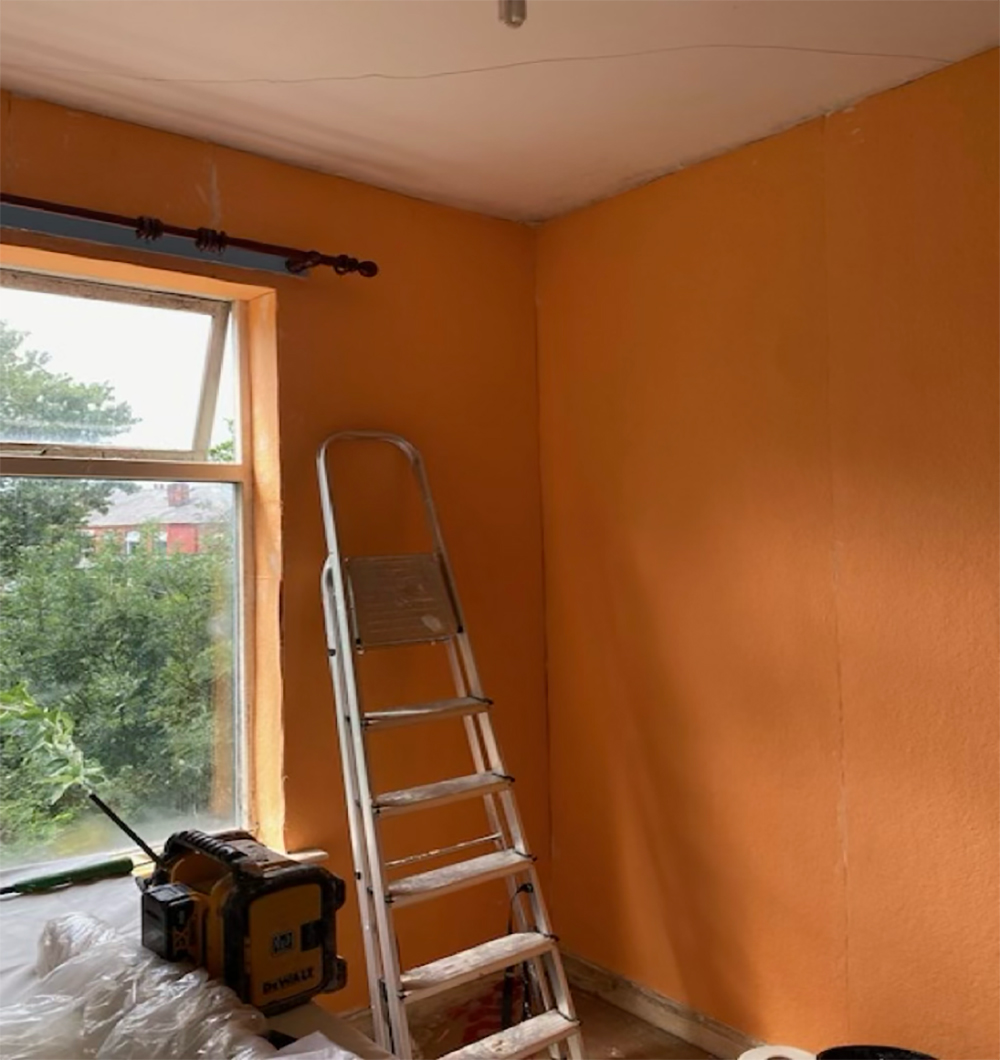
ISO-THERM wall surface insulation applied to walls day one
Any wall paper is stripped from the surfaces to be upgraded, and the plaster then cleaned. A purpose made strong adhesive; compatible with both the cleaned surface and the ISO-THERM is applied to the wall, and the ISO-THERM is placed onto this and flattened by a plasterer with feather edged rules to remove undulation.
The joints in the ISO-THERM are taped with a self-stick fibre scrim; to prevent cracking and the next day a setting coat of finishing plaster is applied to provide a sound surface ready for decoration.
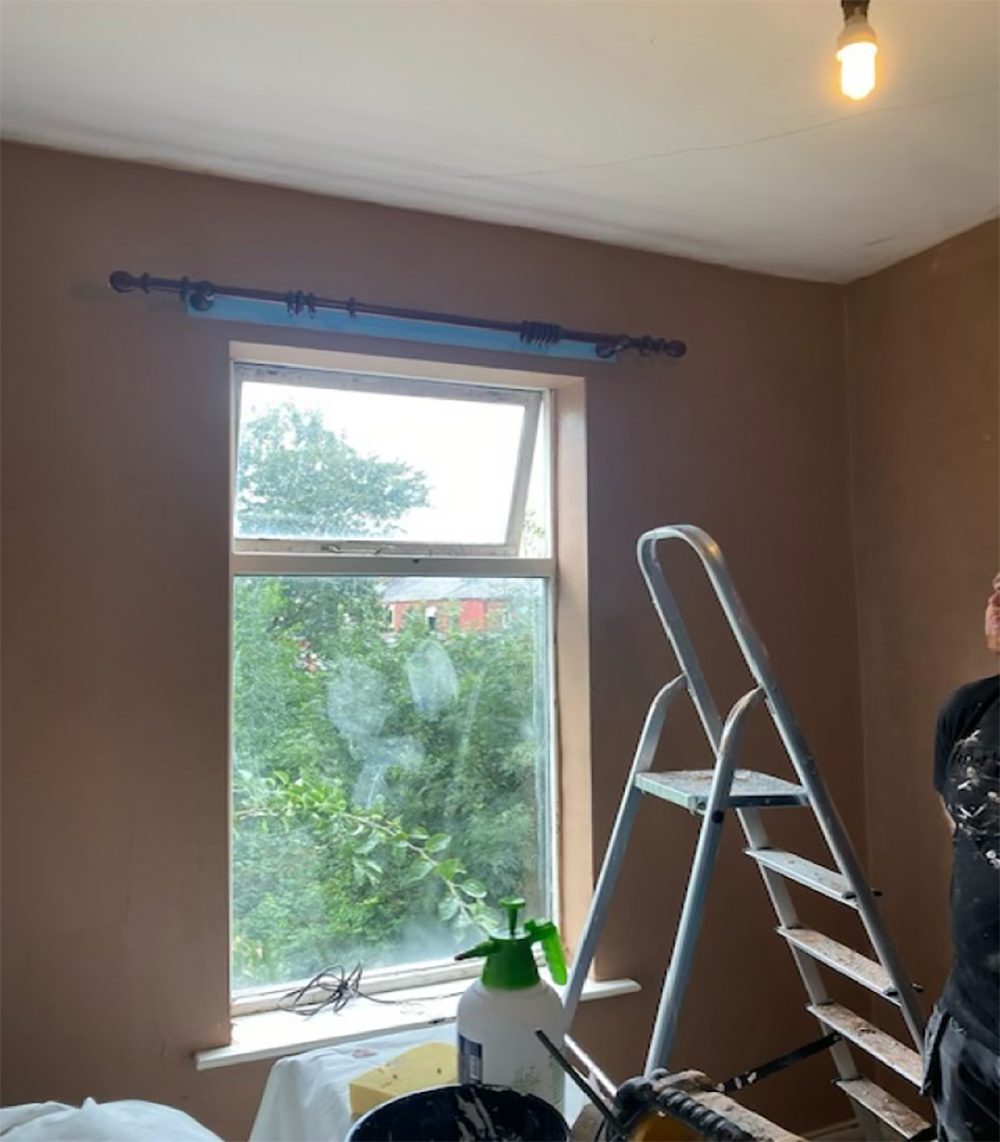
Setting coat applied on the second day of work
The finished room will then be free from the condensation problem which caused the mould growth, and heat loss across the newly upgraded walls is reduced making the heating of the room more efficient; reducing fuel costs because the newly insulated walls lessen heat loss by conduction across the wall.
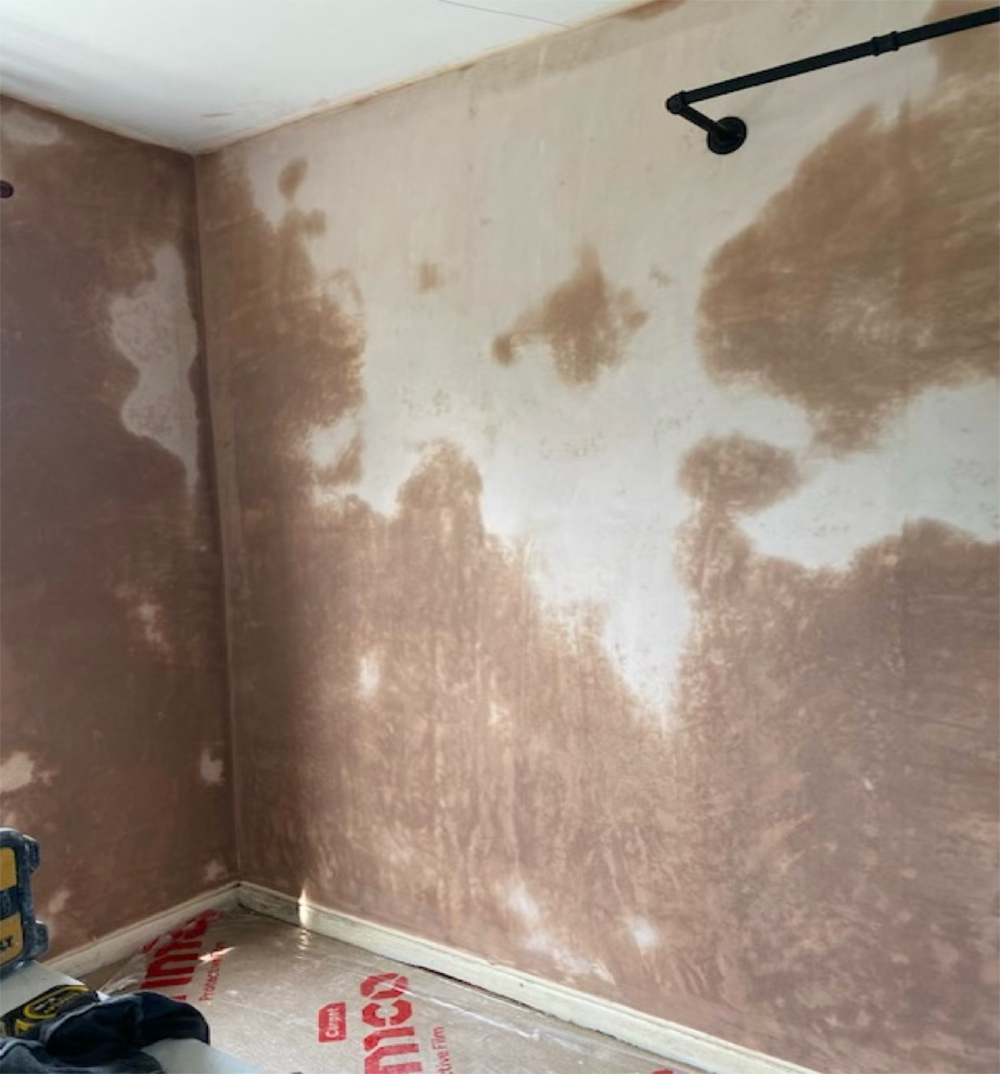
Rapid drying on the third day
There are also other benefits, its terms of the cost effectiveness of the work, as savings are made by not having to remove and reinstate existing wall plaster, or indeed remove the debris from these works. Because the ISO-THERM, adhesive, insulation, and skim finish are thin coatings; it is often possible to leave skirting boards in place, so further savings are made by not having to take off and reinstate skirting boards. In addition to the efficiency and cost effective nature of the application there is also another benefit in time saving: a room may only be out of use for two to three days (excluding decoration) as opposed to 2 to 3 weeks if all the above processes which have been avoided do not require implementation.
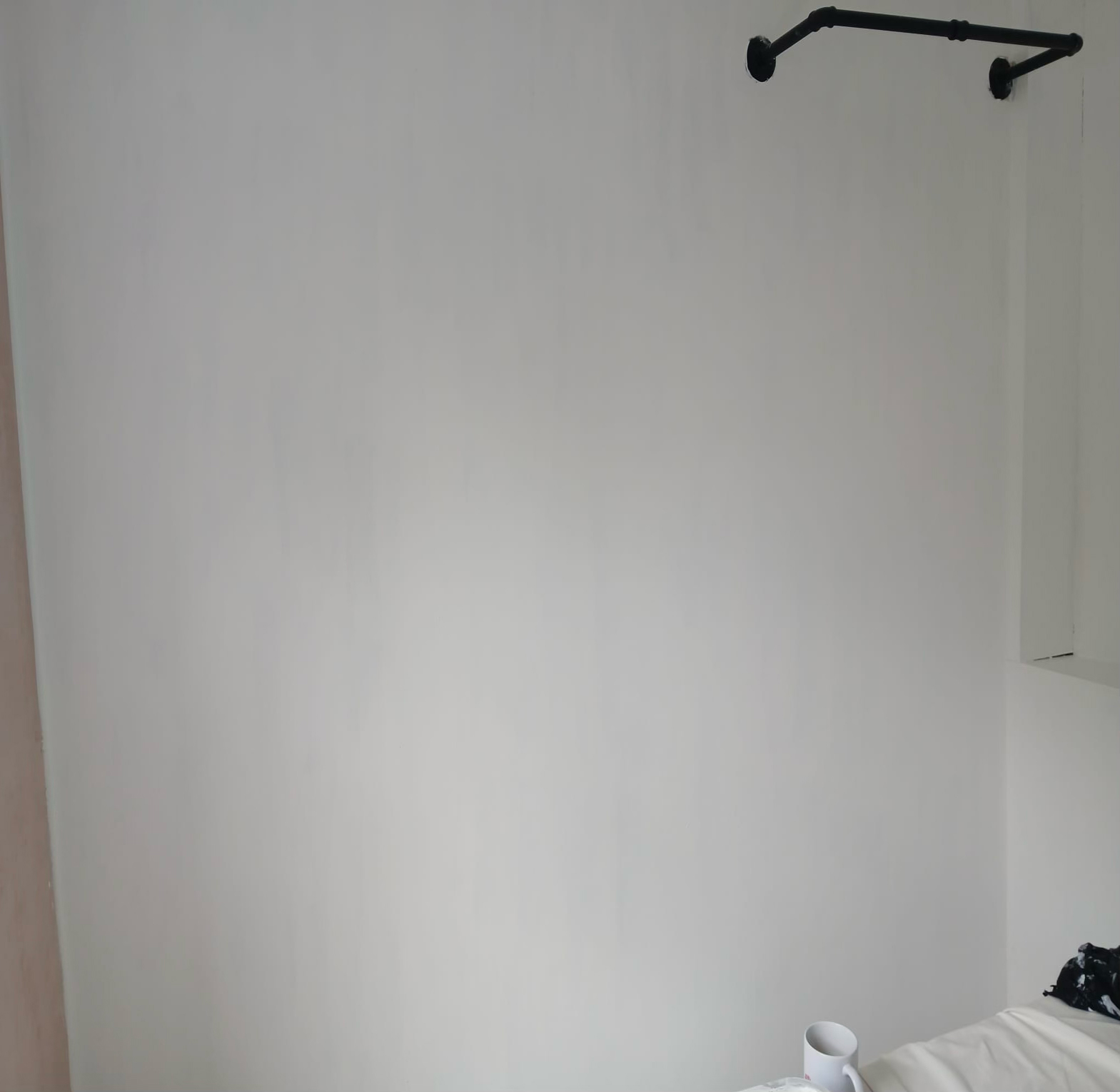
Above decoration commences just a few days after the start date.
To conclude; given circumstances where an area which is in regular use and cannot be out of use for lengthy periods of time; this is an excellent way to deliver a quick, cost effective solution to a dampness and mould growth problem caused by condensation on cold surfaces. After our surveyors have monitored the sequence of work and measured time and cost, they are of the opinion that the installation will pay for itself in heat loss reduction, decoration, and mould inhibitors, within the short to medium term. In short, this is an impressive and practical product: where the system achieves the aims of client, surveyor, and company alike; for the mitigation of cold surface condensation problems.